

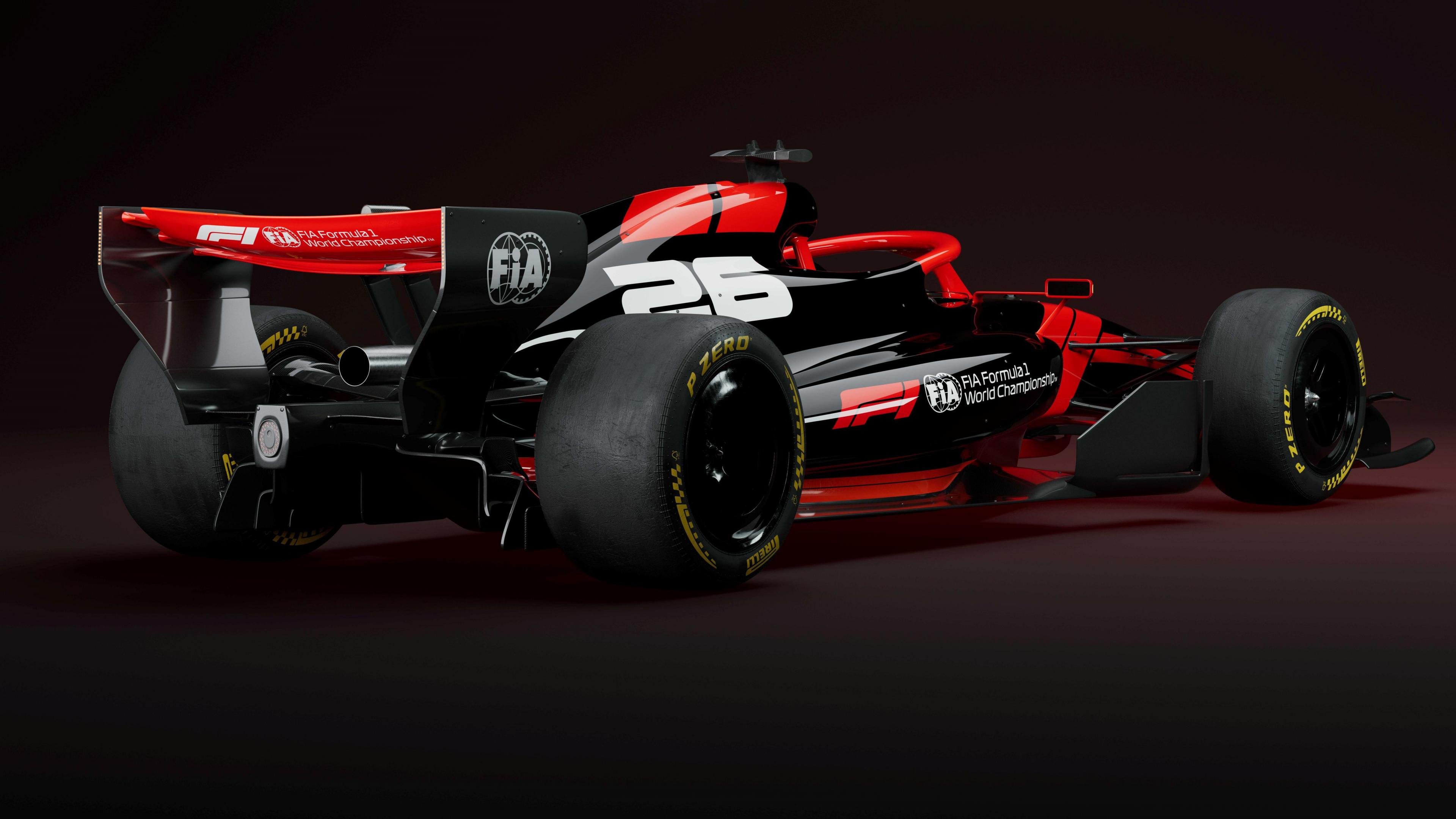
The 2026 Formula 1 cars are expected to be more compact, agile and eco-conscious compared to current models.
F1 has revealed the official vocabulary that will be used to reference the advanced features of its upcoming 2026 regulations.
The championship is embarking on what is potentially the most significant regulation change in its competitive history for the 2026 campaign, featuring revised car and engine specifications and the compulsory introduction of eco-friendly fuels.
The updated 1.6-litre V6 turbo hybrids, which keep the 1.6-litre V6 turbo hybrid, boast a greatly enhanced battery power, necessitating major innovations in the aero packages.
Over a race distance, competitors will strategically manage electrical energy – sometimes even flying laps – to secure the peak performance.
Extensive fan consultation were conducted with a diverse audience, including new, casual and core fans, to determine which terms would aid comprehension of the central aspects of the upcoming rules.
The primary aim was to present a range of advanced features of the racing as accessible as possible for the broadest viewership.
Consequently, older technical labels for specific components – such as "alphabetical mode names" for the adjustable aero – have been discarded in preference for straightforward terms that clearly indicate the primary purpose of the system.
Key Technical Innovations
The FIA states that racers will have more power to make decisions regarding energy deployment, harvesting, and saving energy.
The 2026 rules feature a set of functions that will be visually displayed on television graphics to improve the fans' insight of the strategic duel.
- Overtake Mode: This supersedes the present overtaking aid. It provides a burst of extra electrical energy available when a driver is within one second the leading car to execute an pass.
- Extra Push Mode: This is a manual energy deployment from the ERS that can be used in overtaking or defending. It grants the driver peak output at the push of a button.
Both of these crucial modes will have to be used with calculation, as the overall battery capacity is restricted.
- Active Aero: Both the front and rear wings move automatically – opening on the long straight sections for minimal air resistance and increased velocity, and closing in the bends for peak grip.
- Battery Recharge: The system can recharge the energy store with energy harvested under braking, or during partial power application at the conclusion of a straight or in corners where only reduced throttle is used.
What's Changing on the Cars?
The vehicles for the new era will be more compact and lighter relative to current models, with a wheelbase cut by 200mm to 3,400mm, overall width reduced by 100mm – down to 1,900mm – and the lowest permissible weight reduced by 30kg.
Overall downforce is projected to decrease by approximately a significant margin, although teams will inevitably claw this back as they develop their cars.
Air resistance has been cut by 40%. The cars will employ active aerodynamics – both wings will move on the straights to reduce drag and boost top speed and revert into place for peak handling.
Tyres will continue to use 18-inch wheel rims, but the tyres themselves will be reduced in width, by a quarter-centimetre on the front and 30mm at the rear.
2026 Engine Regulations
The revised hybrid units will have an roughly half-and-half distribution in horsepower generated by the petrol engine and the electrical system, increasing from about one-fifth electric power in the current formula.
The hybrid system is made less complex through the deletion of the complex turbo energy recovery device, the intricate and expensive unit that recovered energy from the exhaust turbo.
Cars will be obliged to compete on carbon-neutral fuel, produced using plant-based materials or synthetic industrial processes.


